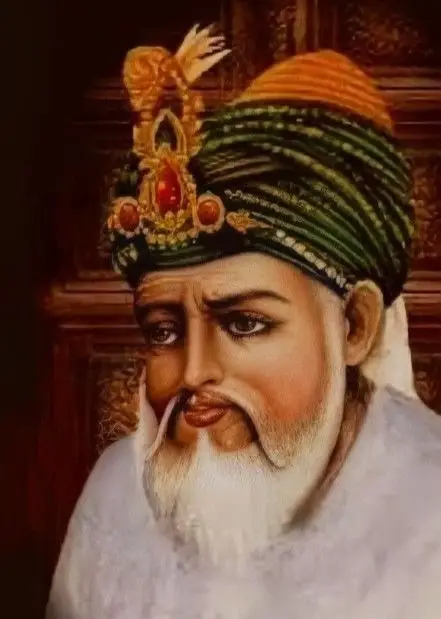
Sultan-ul-Auliyah Syedena GHAUS-E-AZAM
Al-Sultan al-Awliya, Qutb al-Aqtab, Ghaus al-Azam, Mahbub-e-Subhani, Sayyiduna wa Mawlana Hazrat Sheikh Abdul Qadir ibn Abu صالح Musa al-Jilani al-Hasani wal-Husayni رضي الله عنه
Personal Life
| Full Name | Hazrat Sheikh Abdul Qadir Jilani (رحمة الله عليه) |
| Title | Ghous-e-Azam, Piran-e-Pir |
| Born | 1077 or 1078 CE (470 AH), Gilan, Iran |
| Died | 1166 CE (561 AH), Baghdad, Iraq |
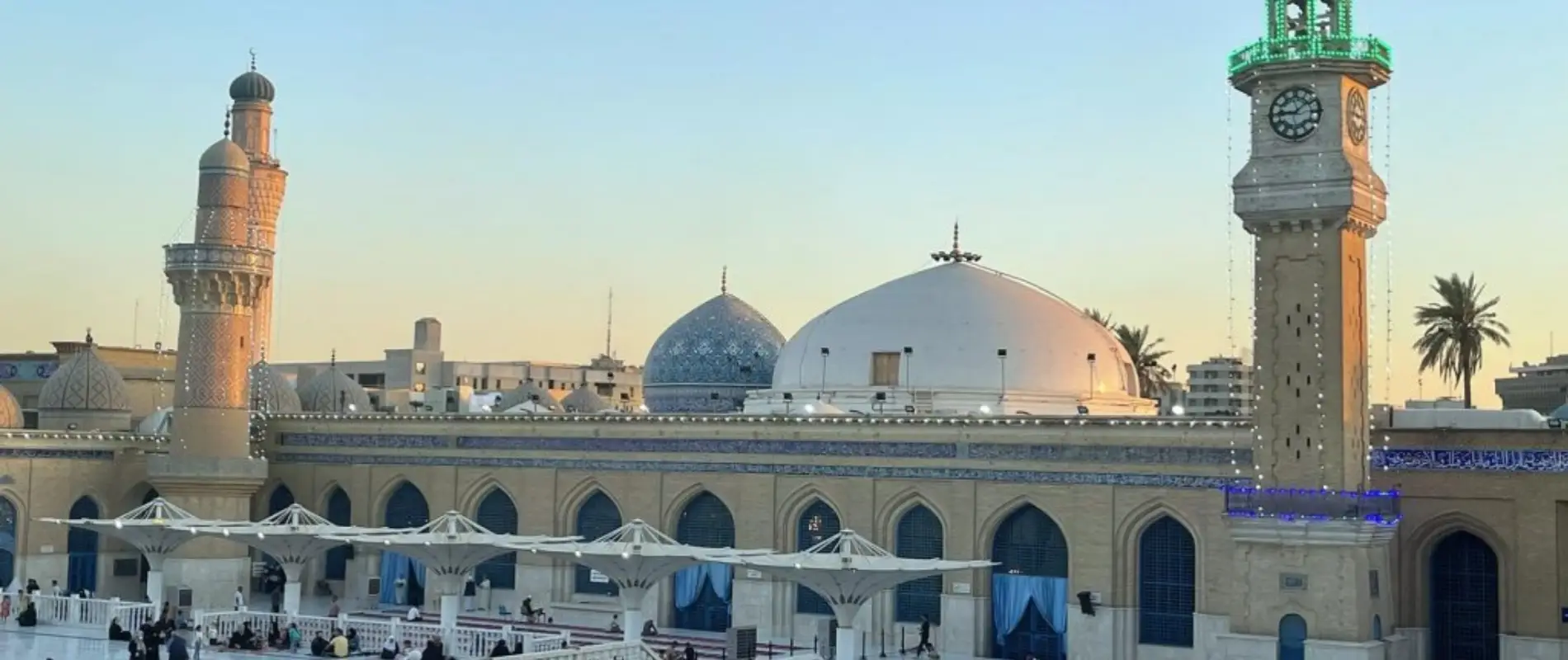
| Resting Place | Shrine of Abdul Qadir Gilani, Baghdad, Iraq |
Birth and Noble Linage
Hazrat Sheikh Abu Muhammad Muhiyuddin Abdul Qadir Jilani (رَحْمَةُ اللّٰهِ عَلَيْهِ), commonly known as Ghaus‑e‑Azam, was born on 1 Ramadan, 470 AH (circa 1077 CE) in the town of Jilan (Gilan) in Persia (modern‑day Iran). His lineage is traditionally traced back to the House of the Prophet Muhammad ﷺ, being Hasani on his father’s side and Hussaini on his mother’s side, making him a Sayyid (descendant of the Prophet ﷺ).
His father was Sayyid Abu Saleh Musa and his mother Sayyida Umm‑ul‑Khayr Fatima. Most narrations state that his mother was around sixty years old at the time of his birth an age when childbirth is rare, highlighting the extraordinary nature of his arrival.
Miraculous Circumstances of Birth
A number of remarkable events are traditionally associated with his birth:
- Blessed Dreams: Before his birth, his father Sayyid Abu Saleh Musa saw the Prophet Muhammad ﷺ in a dream, announcing that Allah would bless him with a pious and beloved son, honored among the Awliyā’ (friends of Allah).
- Impression of the Prophet’s Footprint: Narrations say that at birth an impression of the blessed Footprint of the Prophet ﷺ was seen on his shoulder, interpreted by the people as a sign of his future spiritual rank.
- Spiritual Signs: The newborn is said to have kept a form of fast during Ramadan, not taking his mother’s milk between dawn and sunset, even as an infant, an occurrence regarded by many as miraculous.
Childhood and Early Knowledge
From a young age, Hazrat Ghaus‑e‑Azam demonstrated extraordinary spiritual awareness and devotion. Traditional Sunni sources narrate that even in childhood he was absorbed in the remembrance of Allah rather than worldly play.
When he was around four or five years old and entered the local madrassah (Islamic school), it is reported that angels appeared before him, honoring him and making space for him among the other students—a symbolic indication of his spiritual stature.
Character and Early Manners
Hazrat Ghaus‑e‑Azam’s upbringing was marked by truthfulness, fear of Allah, and sincerity in worship, attributes emphasized in Sunni Islamic teachings as evidence of genuine piety. One well‑known story from his youth, often related in traditional biographies, recounts his journey to Baghdad (where he later became a renowned scholar and saint). On this journey, after his father’s passing, he was traveling with a caravan when it was confronted by bandits. Despite great danger, he chose to speak the truth about his belongings, displaying early moral courage rooted in Islamic values—an example many later Muslims cite to illustrate his early commitment to truth and devotion
Education
From the earliest years of his life, Hazrat Ghaus‑e‑Azam was immersed in learning and spiritual refinement. After his initial upbringing under the loving care of his grandfather Hazrat Sayyid Abdullah Sauma’ee and then his mother, he began his basic studies in his hometown Jilan (Persia). At around four to five years old, he was enrolled in a local madrassah where he mastered basic Arabic grammar, Qur’an recitation, and foundational Islamic teachings.
Traditions narrate that even in these formative years he excelled rapidly in learning. It is conveyed in many Sunni biographical sources that his grasp of lessons was exceptional — he understood and memorised with remarkable ease, far beyond the pace of his peers.
At about eighteen years of age, driven by a burning love for knowledge and spiritual excellence, Hazrat Ghaus‑e‑Azam set out for Baghdad, which at the time was one of the most renowned centres of Islamic learning in the Muslim world. His mother, recognising the noble destiny that awaited him, supported his journey and advised him always to remain true to Islamic teaching.
In Baghdad, he entered the prestigious Jamia Nizamiyya — one of the leading institutions of Islamic scholarship of the age. Here he studied under some of the most distinguished scholars of his time, covering the full spectrum of Islamic sciences.
His teachers included renowned scholars such as:
- Abu al‑Wafa Ali ibn Aqeel — a leading expert in jurisprudence (Fiqh) and Arabic sciences,
- Abu Zakariyya Yahya ibn Ali Tabrizi — a respected teacher in hadith and legal theory,
- Abu Sa’eed Mubarak Makhzoomi — who later became his spiritual guide (Murshid) and granted him Khilafat (authorization in spiritual discipleship).
Hazrat Ghaus‑e‑Azam’s dedication was extraordinary. Within approximately eight years in Baghdad, he completed his studies and acquired mastery in diverse fields of Islamic knowledge including:
- Tafsir (Exegesis of the Qur’an),
- Hadith (Prophetic traditions and their sciences),
- Fiqh (Islamic jurisprudence) with deep grounding in the Hanbali school,
- Usul al‑Fiqh (principles of jurisprudence),
- Arabic grammar and rhetoric,
- Spiritual sciences and mysticism (Tasawwuf)
He not only absorbed knowledge but lived it with sincerity. After finishing his formal studies, he did not rest on academic laurels alone. Instead, he pursued spiritual purification, engaging in long periods of worship, remembrance of Allah (Dhikr), meditation, and ascetic practices to perfect his inner life before teaching others.Upon completing both outward knowledge and inward training, Hazrat Ghaus‑e‑Azam began teaching in Baghdad. His classes attracted large crowds — students of religion, jurists, travelers, and seekers of truth — because he combined sound Islamic scholarship with profound spiritual insight. The clarity of his teachings, his humility, and the ethical excellence he embodied became the hallmark of his scholarly legacy.
In all of this, Hazrat Ghaus‑e‑Azam exemplified the Sunni Islamic ideal of integrating Sharia (outer law) with Haqiqa (inner reality) — showing that true knowledge must be accompanied by sincerity, piety, and service to Allah and His creation.
Narrations on the Spiritual Highness of Hazrat Ghaus‑e‑Azam
1. Prediction by Sayyiduna Junaid al‑Baghdadi (رَحِمَهُ اللّٰهِ)
One of the earliest major saints, Shaykh Junaid al‑Baghdadi (رَحِمَهُ اللّٰهِ), is reported to have said in a spiritual state that:
“His foot is on my shoulders.”
In this state he was informed that a great saint named Abdul Qadir would be born, reside in Baghdad, and reach an exceptional rank among the friends of Allah.
This is considered an earlier Sufi sign of the spiritual impact Hazrat Ghaus‑e‑Azam would achieve.
2. Testimony of Sheikh Abu Saeed Al‑Mukharrami (رَحِمَهُ اللّٰهِ)
Hazrat Ghaus‑e‑Azam’s own spiritual guide in Baghdad, Sheikh Abu Saeed Al‑Mukharrami, played a crucial role in shaping his spiritual path. He witnessed extraordinary signs of Abdul Qadir Jilani’s destined highness:
When he placed Hazrat Ghaus‑e‑Azam in his Sufi order and bestowed upon him the blessed spiritual robe (khirqa), a radiant light was said to descend upon him, symbolizing divine approval and spiritual elevation.
Sheikh Abu Saeed reportedly remarked that one day, all saints of the age would bow in humility before him, foretelling his eventual pre‑eminence among the Awliyā’.
This narration illustrates how the saint’s spiritual rank was acknowledged and celebrated by his contemporaries.
3. Miraculous Encounter Narrated by Sheikh Ahmad Jaam (رَحِمَهُ اللّٰهِ)
In a traditional story, Hazrat Ghaus‑e‑Azam’s spiritual power was evident even to other great saints. Sheikh Ahmad Jaam, known for his spiritual authority, experienced a remarkable event:
A cow sent from Hazrat Ghaus‑e‑Azam to feed Sheikh Ahmad Jaam’s lion was followed by a weak stray dog. Miraculously, the dog subdued the lion and brought it before the saint.
Witnessing this, Sheikh Ahmad Jaam felt profound awe and humility, acknowledging Hazrat Ghaus‑e‑Azam’s extraordinary closeness to Allah and his elevated spiritual status among the Awliyā’.
Such accounts emphasize the divinely manifested blessings associated with his presence, as recognized by other saints.
4. Spiritual Awareness Acknowledged by Khwaja Moinuddin Chishti (رَحِمَهُ اللّٰهِ)
Even saints in other regions, like Khwaja Moinuddin Chishti (رَحِمَهُ اللّٰهِ) of India, are reported to have perceived Hazrat Ghaus‑e‑Azam’s spiritual stature through dreams and spiritual states. Traditional Sufi sources narrate that:
Khwaja Moinuddin Chishti, while engaged in deep meditation, spiritually sensed Hazrat Ghaus‑e‑Azam’s influence and acknowledged his high maqām among all saints of the era.
This recognition highlights the mutual spiritual awareness and reverence shared among the Awliyā’, where true piety and proximity to Allah transcend geographical boundaries.
5. Dreams and Visions from Later Disciples
Over the centuries, many disciples and followers reported spiritual visions and dreams involving Hazrat Ghaus‑e‑Azam:
Some disciples saw radiant light emanating from him during prayers or dhikr, symbolizing his divinely granted spiritual authority.
Others received guidance in dreams, feeling that his presence brought comfort, protection, and spiritual direction.
These narrations reinforce the Sunni Sufi understanding that divine blessings flow through righteous saints to guide those seeking closeness to Allah.
Miracles
Miracles (Karāmāt) of Hazrat Ghaus‑e‑Azam (رَحْمَةُ اللّٰهِ عَلَيْهِ)
Hazrat Sheikh Abdul Qadir Jilani (رَحْمَةُ اللّٰهِ عَلَيْهِ), widely revered as Ghaus‑e‑Azam, is celebrated not only for his scholarship and piety but also for the extraordinary miracles granted to him by Allah (karāmāt). These miracles are signs of his closeness to Allah, widely reported in Sunni Sufi literature, and witnessed or narrated by disciples and fellow saints.
1. Knowledge of the Unseen (Ilm al‑Ghayb)
One of the most frequently reported miracles is Hazrat Ghaus‑e‑Azam’s ability to know the hidden matters of people:
He could discern the intentions, worries, and needs of visitors even before they spoke.
Travelers seeking guidance or assistance often found that he had already anticipated their questions and provided exact solutions.
This is understood as a divine gift (karāmah), a limited knowledge of the unseen granted by Allah to His chosen servant.
2. Protection from Harm
Many narrations recount instances where Hazrat Ghaus‑e‑Azam’s prayers shielded people from danger:
Travelers and disciples faced imminent threats — attacks, floods, or natural calamities — but through his supplication, they reached safety.
One report describes a merchant who was warned of an ambush. After praying with Hazrat Ghaus‑e‑Azam’s guidance, he arrived unharmed, illustrating Allah’s protection through a righteous servant.
3. Healing and Relief
Hazrat Ghaus‑e‑Azam is also renowned for healing through dua and divine blessing:
Accounts tell of fevers and physical ailments disappearing after his prayers.
Some narrations describe miraculous recoveries of children, animals, and even plants in distress, highlighting Allah’s mercy flowing through the saint
4. Influence over Nature
Traditional sources narrate incidents where natural elements responded to his prayers:
Stories include rivers receding at his supplication, or obstacles clearing in ways that allowed safe passage.
A widely cited symbolic account describes his walking stick glowing with light, reflecting divine support.
Such events emphasize the spiritual authority granted to him by Allah.
5. Spiritual Impact in Dreams
Many disciples and followers experienced dreams and visions reflecting Hazrat Ghaus‑e‑Azam’s spiritual stature:
Deceased relatives appearing in dreams reported relief through his prayers.
Disciples described visions of radiant light surrounding him during dhikr, indicating divine blessing and guidance.
These experiences are common in Sunni Sufi literature and show the transcendent effect of a saint’s prayers.
6. Miracles Witnessed by Fellow Saints
Other eminent Sufi saints also recognized his karāmāt:
Sheikh Abu Saeed Al‑Mukharrami and Sheikh Ahmad Jaam reportedly witnessed miraculous signs, such as divine light or extraordinary events, demonstrating his pre‑eminence among Awliyā’.
These accounts were seen as confirmation of his maqām (spiritual rank) and are celebrated in Sufi biographies like Manaqib-e-Ghausia.
Final Years and Passing of Hazrat Ghaus‑e‑Azam (رَحْمَةُ اللّٰهِ عَلَيْهِ)
Later Life in Baghdad
Hazrat Sheikh Abdul Qadir Jilani (رَحْمَةُ اللّٰهِ عَلَيْهِ) spent the majority of his later life in Baghdad, where he became widely known as a teacher, preacher, and spiritual guide.
He continued to teach large gatherings of students and devotees, offering guidance in Fiqh, Hadith, and Tasawwuf.
His sessions attracted people from across the Islamic world — scholars, rulers, traders, and ordinary citizens — who came to benefit from his knowledge, piety, and spiritual insight.
Hazrat Ghaus‑e‑Azam emphasized Sunnah adherence, moral excellence, and devotion to Allah, blending rigorous scholarship with spiritual refinement.
During this period, he also oversaw dispersal of charity, spiritual counseling, and community service, reflecting the practical impact of his teachings on society.
Spiritual Practices
Even in his old age, Hazrat Ghaus‑e‑Azam maintained long hours of worship (Ibadah) and remembrance of Allah (Dhikr).
He regularly engaged in night prayers (Tahajjud), fasting, and recitation of the Qur’an.
His devotion was so intense that disciples often reported visions of radiant light around him during prayer, reinforcing the sense of his spiritual elevation and divine closeness.
Miracles in Later Years
Even in his final years, his life was marked by divinely-granted miracles (karāmāt):
Many disciples recounted healing, protection, and spiritual guidance through his prayers.
Others testified to dreams and visions in which Hazrat Ghaus‑e‑Azam appeared, offering solace and guidance, further confirming his high spiritual rank among the Awliyā’.
These miracles, always understood in Sunni tradition as granted by Allah, reinforced his reputation as Ghaus‑e‑Azam (“The Greatest Helper”).
Passing and Legacy
Hazrat Ghaus‑e‑Azam passed away on 11 Rabi’ al-Thani 561 AH (1166 CE) in Baghdad. His passing was deeply mourned by scholars, disciples, and the wider Muslim community:
Thousands attended his funeral to pay respect to his piety, scholarship, and spiritual guidance.
He was buried in what is now the Abdul Qadir Gilani Mosque in Baghdad, a site that continues to draw millions of visitors and devotees annually.
Even after his passing, his teachings, spiritual practices, and karāmāt continue to inspire countless Muslims and seekers of Tasawwuf across the world. His life exemplifies the balance of knowledge, worship, and service to humanity — a model of the Sunni Sufi ideal.
Sunni Perspective on His Life and Passing
Hazrat Ghaus‑e‑Azam is remembered as a friend of Allah, scholar, and guide, whose life was entirely devoted to Shariah and Haqiqa (inner reality).
His death is seen not as the end of influence but as the transition of a servant whose prayers and guidance continue to benefit the faithful, a concept emphasized in Sunni Sufi teachings.
Sunni Muslims continue to
honor his memory with respect, seeking spiritual guidance through his teachings, prayers, and example, without attributing divine power to the saint himself.