
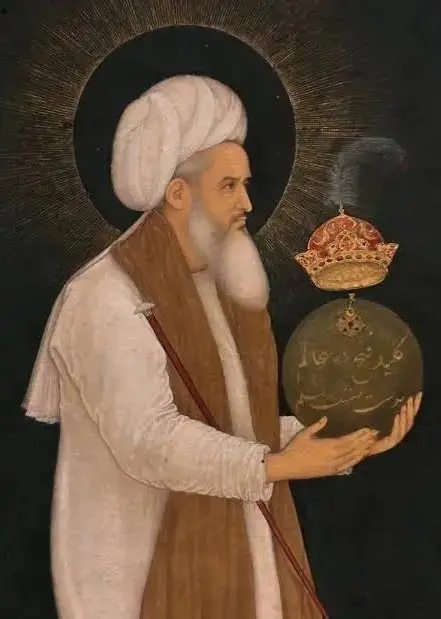
Hazrat Khawaja Ghareeb Nawaz
Taj-ul-Arifeen, Sultan-ul-Hind, Khawaja Ghareeb Nawaz Sayyiduna wa Mawlana Hazrat Moinuddin Hasan ibn Ali Chishti رحمت الله عليه
Personal Life
| Born | 1141 CE (536 AH), Sistan (or Sanjar, Khorasan region) |
| Died | 1236 CE (633 AH), Ajmer, Rajasthan |
| Resting Place | Ajmer Sharif Dargah, Ajmer, India |
Early Life
Hazrat Khawaja Moinuddin Chishti (رحمة الله عليه) was born in 536 AH / 1141 CE in Sistan (some narrations mention Sanjar).
He belonged to a noble and pious Sayyid family. His father, Khawaja Ghiyasuddin Hasan (رحمة الله عليه), was a respected and wealthy man, while his mother, Bibi Mah Noor (رحمة الله عليها), was known for her righteousness and devotion.
From childhood, signs of piety were evident in him. He showed kindness to the poor, respect to elders, and a deep inclination towards worship.
At a young age, he became an orphan. He inherited a garden and a grinding mill, but his heart was not attached to worldly wealth.
Spiritual Awakening
A famous and widely accepted narration mentions that a pious dervish, Ibrahim Qandozi (رحمة الله عليه), visited his orchard.
Hazrat Khawaja served him with great respect. The dervish gave him a piece of bread, and by the blessing of that moment, a spiritual state (hal) overtook him.
After this, he distributed all his wealth among the poor and devoted his life completely to seeking knowledge and closeness to Allah.
Education and Spiritual Training
Hazrat Khawaja Ghareeb Nawaz (رحمة الله عليه) traveled to renowned centers of Islamic learning such as:
- Bukhara
- Samarkand
He acquired mastery in:
- Qur’an and its sciences
- Hadith
- Fiqh (Islamic jurisprudence)
- Tasawwuf (Sufism)
He later took bay‘ah (spiritual allegiance) at the hands of the great Sufi master:
Khawaja Usman Harooni (رحمة الله عليه)
Under his guidance, he underwent intense spiritual discipline (mujahida) and training for many years. He traveled with his Shaykh and benefited from his companionship until he was granted khilafat (spiritual succession).
Journeys and Blessings
During his spiritual journey, he visited:
- Baghdad
- Mecca
- Medina
In Medina Munawwarah, it is reported in Sunni Sufi sources that he received spiritual direction to go towards Hindustan to serve the Deen of Islam.
Arrival in Ajmer and Mission
He finally settled in Ajmer, which became the center of his preaching.
His method of دعوت (da‘wah) was purely based on:
- Love and compassion
- Humility and service
- Good character (akhlaq)
He never forced anyone; instead, people were drawn by his sincerity and conduct.
Because of his immense service to humanity, he became معروف as “Ghareeb Nawaz” (Benefactor of the Poor).
Teachings
His teachings were fully aligned with Ahl al-Sunnah wa’l-Jama‘ah, emphasizing:
- Strict adherence to Shari‘ah
- Love of Rasulullah ﷺ
- Service to creation for the sake of Allah
- Purification of the heart
Some of his famous sayings:
- “The best worship is to help the oppressed and feed the hungry.”
- “He who is loved by Allah serves His creation.”
Famous Disciples
Among his كبار خلفاء (great deputies):
- Qutbuddin Bakhtiar Kaki (رحمة الله عليه)
- Baba Farid (رحمة الله عليه)
Through this blessed chain came great saints like Nizamuddin Auliya (رحمة الله عليه).
Miracles
In Sunni belief, karamat of Awliya Allah are true and occur by the permission of Allah. Some well-known and widely narrated karamat include:
1. Blessing of Food
It is reported that little food in his langar would become sufficient for many people through Allah’s barakah.
2. Acceptance of Du‘a
Many people experienced that his supplications were accepted quickly, especially in times of hardship.
3. Spiritual Impact
Without argument or force, people’s hearts would change simply by sitting in his company. This is regarded as a great spiritual karamat.
4. Relief in Hardships
There are narrations that during difficulties in Ajmer, his prayers brought ease and relief to the people.
(Note: Sunni scholars emphasize that all karamat happen only by Allah’s will, and the saint is not independent.)
Final Years and Wisaal
Hazrat Khawaja Ghareeb Nawaz (رحمة الله عليه) spent his last years in worship, teaching, and خدمة of the people.
He passed away in 633 AH / 1236 CE in Ajmer Sharif.
His passing is referred to as “Wisaal”, meaning union with the mercy of Allah.